22 Sept 2026 /
Insights
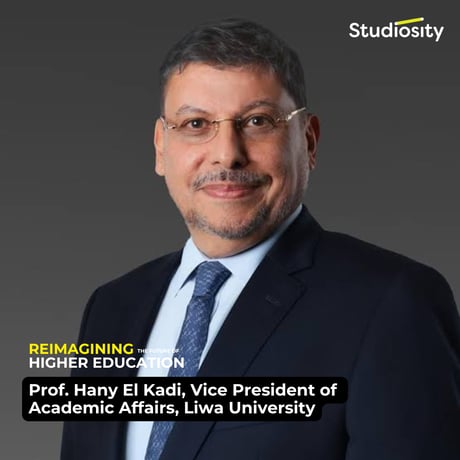
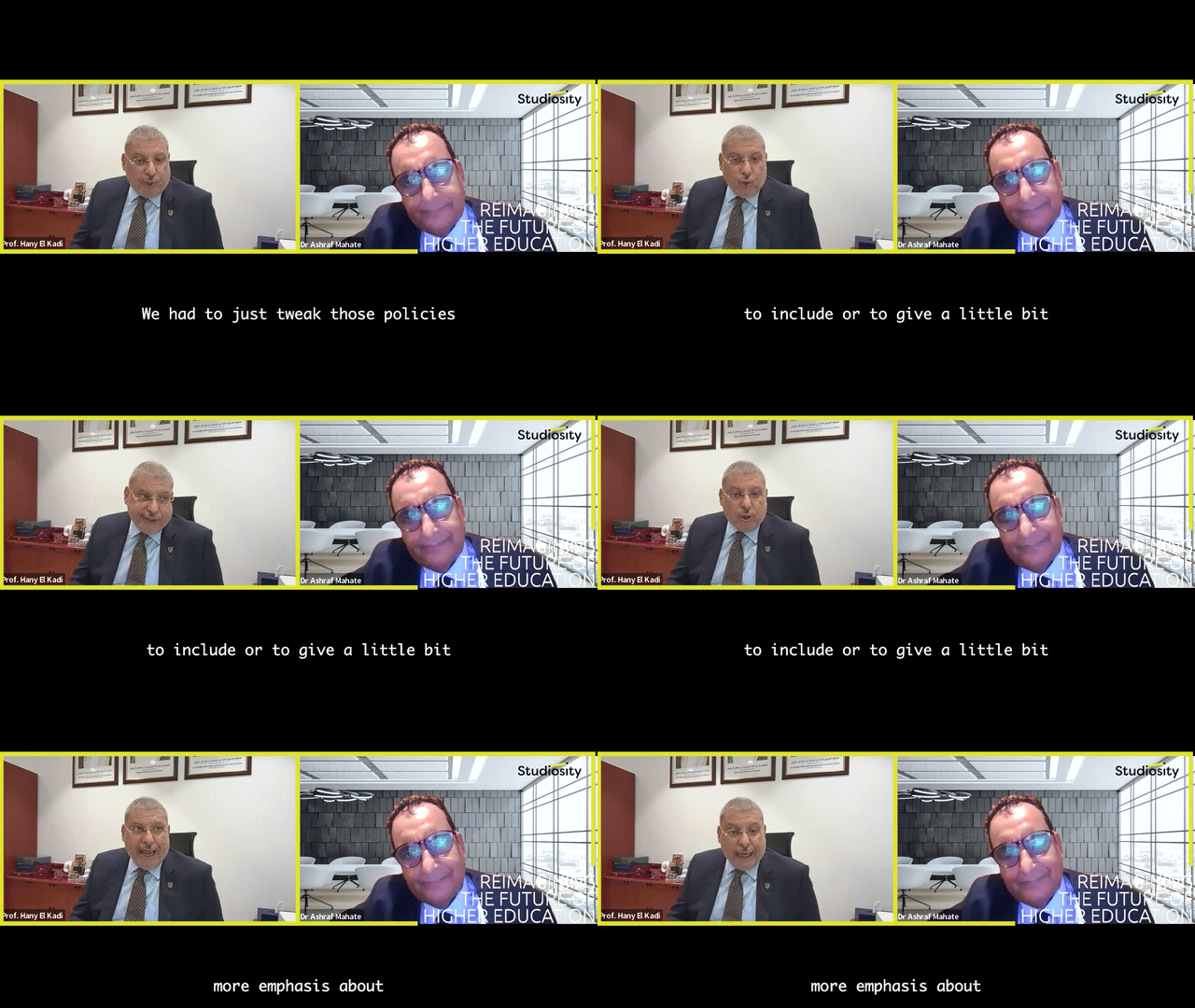
In a recent interview on Studiosity's 'Reimagining Higher Education' podcast, Professor Hany El Kadi, Vice President of Academic Affairs at Liwa University shared with podcast host Dr Ashraf Mahate, his vision for the future of higher education. He discussed how the institution is navigating rapid technological changes while maintaining its core educational values.
Embracing AI and adapting teaching methods
Prof Hany and Dr Ashraf discussed how today's students access information digitally, rather than through traditional means like books and libraries. To adapt, faculty must change their traditional teaching methods, as students no longer expect lecturers to simply pass on information from the front of a classroom. Under his leadership, Liwa University has actively integrated AI into its operations, from establishing AI-focused policies and faculty professional development to creating new academic programs centred on AI. Prof Hany noted that while fundamental principles must still be taught, students must also learn how to leverage AI tools to produce faster and better results, especially since current knowledges may quickly become obsolete.
"We need to teach the students how to learn and how to educate themselves... we have to educate them on how they can use the tool of artificial intelligence to reach more heights than we have ever reached before."
Rethinking assessment in an AI-driven world
When it comes to evaluating student knowledge, Prof Hany highlighted that traditional homework and final exams are no longer sufficient, as AI can easily generate perfect answers. He suggested a potential return to paper-based exams and stressed the importance of class presentations and discussions. By asking questions based on specific classroom discussions or challenging students to explain their problem-solving processes, educators can better assess true comprehension rather than just the final output.
Cultivating academic ethics over policing
Rather than checking whether students are guilty of cheating, Prof Hany advocates for proactive education on academic integrity. He believes that understanding what is acceptable when using AI should begin as early as primary school.
While Liwa University has updated its existing plagiarism policies to address AI-generated content, Prof Hany insists that educators are not policemen. He argues that a trusting environment, combined with appropriate penalties for those who break the rules, is more effective than constantly policing student submissions.
The irreplaceable value of human connection and real-world application
Despite the rise of AI, Prof Hany believes that the university experience remains invaluable. He pointed out that AI cannot replace the essential human interactions, interpersonal skills, and peer-to-peer learning that universities foster. Furthermore, he reiterated the critical role of real-world application, noting that Liwa University integrates clinical training, internships, and industry projects into its curriculum. With nearly half of their students already employed, these practical experiences ensure graduates are ready to contribute meaningfully to society.
"A person who knows a little bit less but has good interpersonal relationship[s], I would take the second one anytime."
Looking toward the future, Prof Hany hopes that students will remember the caring faculty and supportive staff at Liwa University above all else. His ultimate advice to students is to master the basics so they can critically evaluate AI outputs, reminding them that the most easily obtained answers are not always the most valuable.
🎧 You can listen to the full episode via your preferred podcast service:
Apple podcasts | Spotify | YouTube | Vimeo