03 Aug 2026 /
Insights

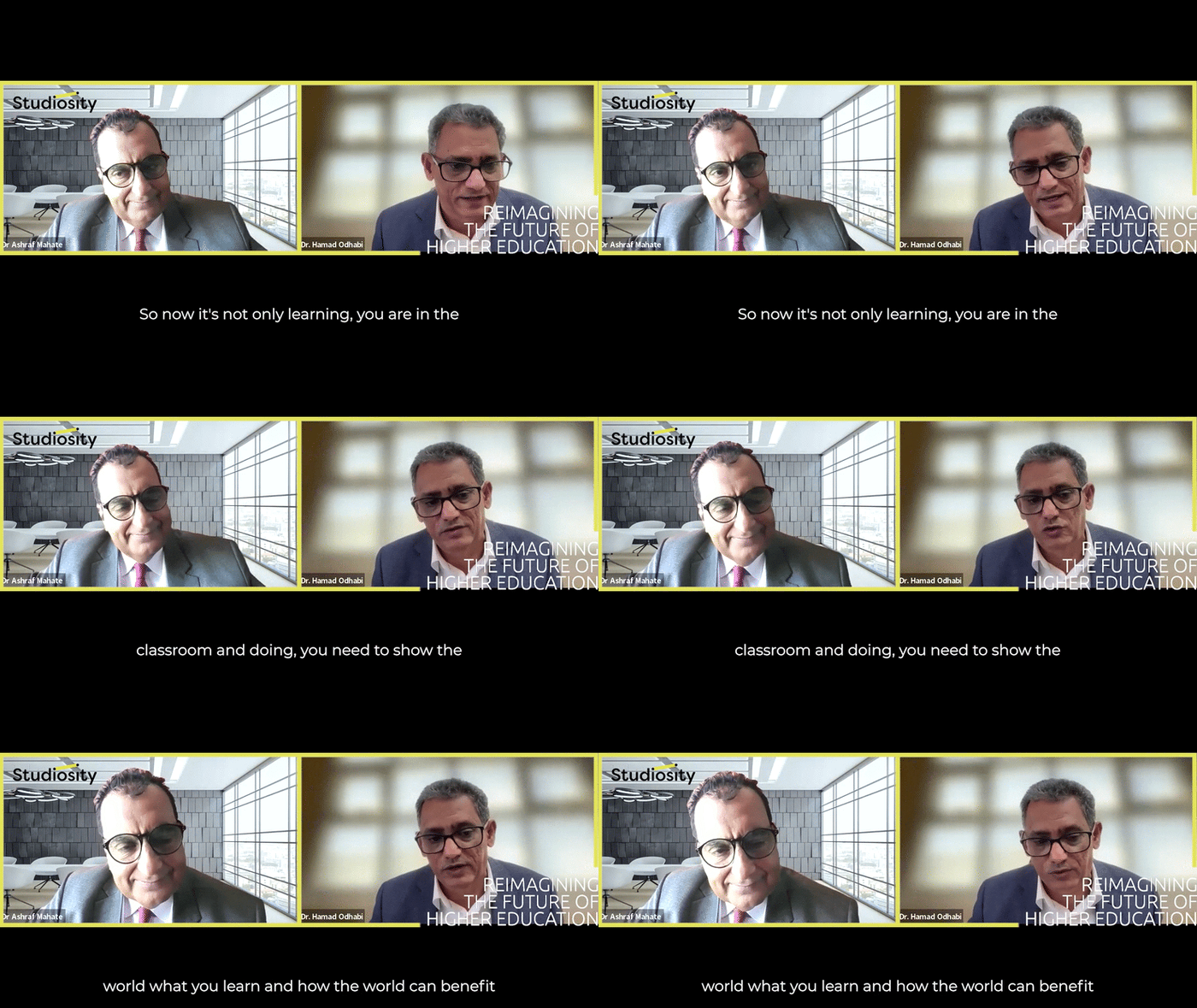
In a recent episode of Studiosity’s Reimagining Higher Education podcast, host Dr Ashraf Mahate sat down with Dr Hamad Odhabi, Vice Chancellor for AI and Operational Excellence at Abu Dhabi University, to explore how AI is reshaping higher education. Below are five key insights that emerged during the interview, around balancing technological disruption with human connection, dynamic assessments, and enduring degree value.
1. Put human connection first
Dr Hamad's trajectory, from coding on early Sinclair computers at King Saud University all the way to leading the integration of AI at Abu Dhabi University, underscores that technology alone cannot replace mentorship. When leaders act as supportive role models who listen and empower, students are inspired to achieve. Dr Hamad said that while digital tools evolve rapidly around us, emotional support, shared experiences, and genuine human connection remain the irreplaceable core of meaningful learning.
"We are human, and the human needs human connections. We get inspired by others... The human part in education is very critical."
— Dr. Hamad Odhabi
2. Shift classrooms from knowledge delivery to exploration
When general-purpose LLMs can provide instant answers, traditional passive lecturing is no longer sufficient for higher education. Institutions must shift focus toward guiding their students' learning journeys. Dr Hamad talked about the flipped classroom framework, where instead of arriving unprepared, students can leverage AI to explore concepts beforehand, ask critical questions, and bring concrete evidence of their understanding to class. Classroom time can then be dedicated to the debate, reflection, and human collaboration that AI cannot replicate.

3. Evaluate the learning process, not just the outcome
One-off written assignments and easily searchable exam questions fail to measure true mastery in the AI era, and focusing on policing these documents or artefacts is a wasted endeavour. Rather than relying on punitive surveillance, institutions must evaluate learning incrementally through discussions, oral presentations, iterative checkpoints, and reflective exams. Abu Dhabi University (ADU) uses structured AI tools for exam moderation and interactive student reflections to preserve academic credibility while building mutual trust.
"Learning is a process, and the process with checkpoints in between... and the process is the only way to be sure of that learning."
— Dr. Hamad Odhabi
4. Incorporate only purpose-built AI structures
To avoid the chaos of open-ended AI applications that are not built for higher education, Dr Hamad explained that ADU embeds structured, custom AI systems across various campus operations. These range from AI-assisted recruitment screening and research publication analysis to specialized faculty certifications in AI-enhanced teaching. Furthermore, they track 12 core graduate attributes, such as leadership, teamwork, and communication, providing students with extra-curricular transcripts that show career-readiness to employers.
5. Anchor degree value in real-world impact
The long-term value of a degree is built on-campus, through immersive problem-solving, practical work like lab work, and direct industry collaboration. Dr Hamad says that by pairing personalized AI support with dedicated academic and pastoral care, universities can boost student success, cultivate lifelong capabilities, and deliver transformative educational experiences.
"The purpose of education stays the same: helping humans build knowledge, expertise, and become effective in society. But the way we do it has to change. The university will no longer be a place where a teacher simply lectures; it will become a place where you bring industry, bring real problems that need to be solved, and students will be immersed into solving those problems."
— Dr. Hamad Odhabi
🎧 You can listen to or watch the full podcast episode here: