19 Aug 2026 /
Insights
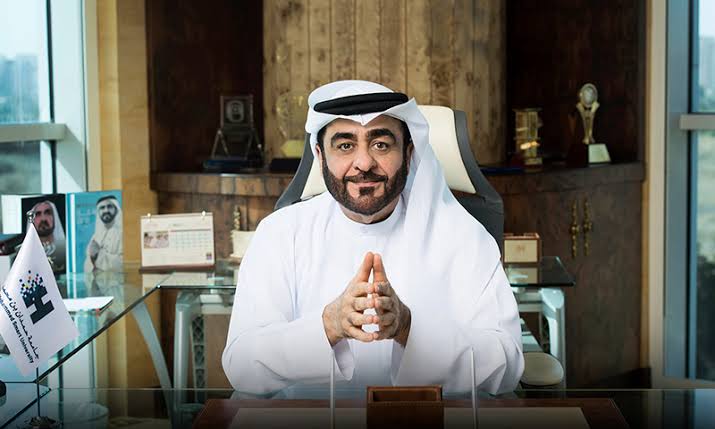
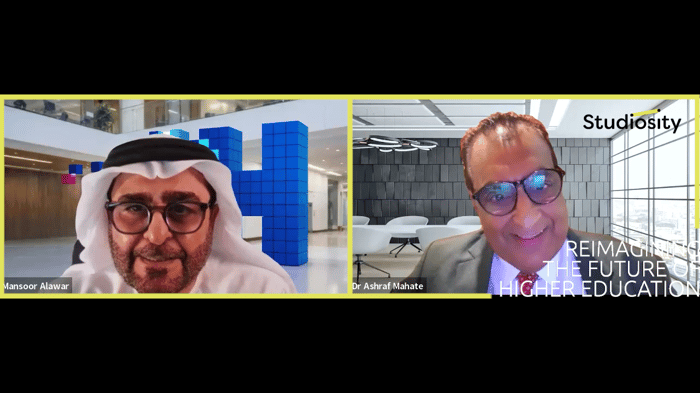
In a recent episode of the Reimagining Higher Education podcast, His Excellency Dr Mansoor Al Awar, Chancellor of Hamdan Bin Mohammed Smart University (HBMSU), shared his transformative vision for higher education in the age of artificial intelligence. As knowledge becomes universally accessible, universities must fundamentally evolve to maintain their core value and relevance in today's rapidly changing workforce.
Shifting from transmitting information to building capability
Addressing the rise of generative AI, Dr Al Awar highlights that higher education no longer holds a 'monopoly' on knowledge access. With AI now able to explain, translate, and test concepts for students in seconds, he emphasises that a university's true role must evolve. Rather than acting as mere information conduits, institutions must pivot toward building human capability—fostering critical thinking, ethical responsibility, and lifelong adaptability.
"Our value can no longer rest primarily on transmitting information. It must lie in helping learners to develop, actually, judgement, critical thinking, ethical responsibility, creativity, resilience, and the ability to continue learning throughout life."
— HE Dr Mansoor Al Awar
Questioning old assumptions, not just digitizing old practices
Having pioneered smart online learning in the GCC region since 2002, HBMSU demonstrates that true digital transformation is not merely about moving physical classrooms onto digital screens. Educational innovation requires institutions to examine foundational pedagogical assumptions rather than simply automating outdated legacy practices.
"A university does not become innovative in my views because it uses new technology. No, because it becomes innovative when it's willing to question old assumptions." — HE Dr. Mansoor Al Awar
-low.gif?width=640&height=360&name=His%20Excellency%20Dr.%20Mansoor%20Alawar%2c%20Chancellor%2c%20Hamdan%20Bin%20Mohammed%20Smart%20University%20(HBMSU)-low.gif)
Technology should enable learning, not replace it
Addressing fears that technology will render professors obsolete, HE Dr. Al Awar talked about how at HBMSU, they have focused on how AI can support learning and empower academic staff. By deploying specialised agentic AI to absorb up to 95% of routine administrative burdens, such as scheduling, syllabus updates, and question bank generation, HBMSU have liberated their faculty. This change redirects valuable academic time away from low-value paperwork and back into real teaching: mentoring students, guiding research, and cultivating deep, human-centered learning.
Evaluating process over product builds bilateral trust and authentic integrity
Addressing the challenge of AI-generated assignments, HE Dr. Al Awar argues that higher education must shift from evaluating static, final submissions to assessing the continuous learning process. Rather than relying on AI detection software - which he warns creates an adversarial environment of suspicion - he recommends gathering authentic "proof of work" throughout the student's journey.
By evaluating draft revisions, problem-solving reasoning, and transparent disclosures of AI prompt usage, educators are able to observe how a student thinks rather than just what they produce. For HE Dr. Al Awar, this approach replaces academic policing with 'bilateral trust', fostering an honest environment where learners feel safe to acknowledge uncertainty and learn from mistakes.
"Sustainable academic integrity must be built on trust, clarity, and shared responsibility... A surveillance culture can push students to hide uncertainty. A trust-based culture encourages them to confront it."
— HE Dr. Mansoor Al Awar
Transitioning to a subscription-based skill economy redefines educational success
HE Dr Al Awar believes that higher education is rapidly shifting from a traditional certificate economy to a continuous skills economy. In the near future, universities will evolve from one-time degree providers into lifelong learning hubs. Success will no longer be measured solely by graduation numbers, but by how effectively alumni return to subscriber-based platforms to continuously reskill throughout their careers.
Ultimately, Dr. Al Awar’s vision redefines educational success for an AI-driven world: higher education's primary mission is no longer to deliver temporary knowledge, but to cultivate resilient, lifelong adaptability. As universities replace outdated legacy assumptions with continuous learning models and AI-enabled mentorship, higher education transforms from a transactional, four-year qualification into a lifelong partnership in human potential.
🎧 You can listen to the full episode via your preferred podcast service:
Apple podcasts | Spotify | YouTube | Vimeo