31 Jul 2025 /
Insights
Academic Integrity Policy · 2025–2026
Academic Integrity Policy
Published by Studiosity Academic Services Status Sector Governance Standard Applies to All staff, Subject Specialists, Student Mentors & AI services
Studiosity is committed to maintaining the highest levels of academic integrity by creating, using, and sharing information in a manner that is responsible, honourable and, at all times, ethical.
Studiosity considers the upholding of academic integrity to be the
responsibility of all staff within our organisation, as well as all Subject
Specialists and Student Mentors.
We take an educative approach to ensure students, Subject Specialists, Student Mentors and staff are provided with the support needed to effectively address any academic integrity issues that may be identified.
Foreword from the Chief Academic Officer
From my experience, Studiosity is a company where vision, values, and outcomes are aligned. We are driven by a commitment to transforming students' lives and enhancing their life chances by building competence and confidence, through developing core academic and help-seeking skills. The company as a whole and every individual working for it is committed to the sector-wide pursuit of academic excellence founded on the highest standards of integrity.
Studiosity is in a unique position to support both students and our partner institutions in this pursuit, and with the recent and necessary emphasis on, and scrutiny of, academic integrity, we stand ready to provide the highest quality, ethically-sound education support.
“Studiosity is driven by a commitment to transforming students' lives and enhancing their life chances by building competence and confidence, through developing core academic and help-seeking skills. ”
For students, the focus is on an educative approach as they strive to develop their skills and understanding of academic standards; for partners, the goal is to provide timely, relevant insights into any elements of student behaviour that might indicate a need for further action at the institution level.
Furthermore, Studiosity's underlying philosophy demands that we demonstrate our unerring commitment to academic integrity through the actions of each and every member of our team, from senior management to our online Subject Specialists, to Student Peer Mentors working on the platform.
Academic Advisory Board
We have always sought advice and collaboration with the best minds—a drive that parallels our mission of enquiry-based learning support for all students. We continue to take guidance from and work closely with those whose passion mirrors our own.
Our Academic Advisory Board was formed to provide advice, ensure the company maintains the highest standards of academic integrity and rigour for our students and partners, and deliver feedback on innovations and service development.
Prof Judyth Sachs Former Deputy Vice-Chancellor, Provost Macquarie University; former Pro Vice-Chancellor Learning and Teaching, University of Sydney
Prof Sally Kift Adjunct Professor at JCU, La Trobe, and QUT
Prof John Rosenberg Former Senior Deputy Vice-Chancellor and Vice-President (Global Relations), La Trobe University
Prof Chris Tisdell Professor and Director, Scientia Education Academy, University of New South Wales
Prof Cliff Allan Former Vice-Chancellor, Birmingham City University
Prof Rebecca Bunting Vice-Chancellor and Chief Executive, University of Bedfordshire
Ann Buller C.M. President Emeritus, Centennial College
Prof Petra Wend Former Principal and Vice-Chancellor, Queen Margaret University
Dr Noreen Golfman Former Provost and Vice-President Academic, Memorial University, St John's, Newfoundland
Dr Mamdouh Shoukri Former President and Vice-Chancellor, York University
Prof Andrew Wathey CBE Former Vice-Chancellor and Chief Executive, Northumbria University
Dr Ashraf Mahate Chief Economist Trade and Economic Development, Dubai Government
Vision, mission & policy purpose
Studiosity was founded specifically to meet social challenges. Today, our sole mission is still to increase life chances for students, everywhere.
There has long been a disparity in access to education resources, exacerbated by the tyranny of distance between remote, rural, regional, and urban populations; to add to this, there are crippling socio-economic barriers, even between neighbouring areas. Our model sought to overcome the limitations of a student’s socio-economic or geographical circumstances by vastly improving access to high-quality help, exactly when help is needed. We connect our AI-powered learning technology (Studiosity+) and/or human experts, with a student online; anytime, anywhere.
Partnerships at the institutional level have been the core of our operations since the start for several reasons: for ubiquitous access, for educator oversight and insight, to remove financial barriers to students, and to ensure social change is measured at the scale needed. We thank our education partners—universities, institutes, government, and schools in Oceania, Asia, Europe,
North America, and Africa—for believing as strongly as we do in access to education support, to help us pursue this critical mission.
Purpose of this policy
- To define academic integrity in the context of the higher education industry as well as Studiosity's context.
- To outline the responsibilities of Studiosity's staff, Subject Specialists, and Student Mentors to uphold academic integrity.
- To define strategies that Studiosity employs to uphold academic integrity.
- To outline consequences for breaches of academic integrity.
This policy applies to all Studiosity staff, Subject Specialists, and Student Mentors. It is complemented by existing Studiosity policies including our AI-for-Learning Policy, which outlines principles underpinning our commitment to protecting students' personal cognitive achievement and sense of belonging, and the academic reputation of our institutional partners.
It is further supported by other training materials, including Guide, Not Answers and the Core Skills Approach (both summarised below).
Core pedagogical frameworks
Provide Guidance, Not Answers
Studiosity’s approach to support for learning assessable content is based around scaffolding, empowering, and building capacity within students to enable feedforward, continual learning, and advancement.
The main role of our Subject Specialists, Student Mentors, and Studiosity+ is to facilitate learning
outcomes through active dialogue and guided questioning and not to simply provide answers to questions. Our Subject Specialists and Studiosity+ provide tools, assistance, and support by establishing the student’s current level of understanding, what is not known, and what is required to bridge and scaffold their knowledge gap. Students need to be actively engaged with the question during the learning session to ensure a sound educational outcome is
achieved.
Core Skills Approach
During a session, it sometimes becomes apparent that the student lacks a 'core skill' that is necessary to understand and work on the question at hand.
In these situations, the Subject Specialist, Student Mentor, or Studiosity+ identifies the
core skill that is missing and discusses this with the student so that they are better placed to continue with their original
question.
In this way, the problematic concept is clearly explored in general terms so that the student is able to apply their new understanding of the concept to their question and similar questions in the future.
Definition of academic integrity
Studiosity's Academic Integrity Policy aligns with established global standards and frameworks:
International Center for Academic Integrity (ICAI, 2021) Defines academic integrity as 'a commitment to six fundamental values: honesty, trust, fairness, respect, responsibility, and courage. More than merely abstract principles, the fundamental values serve to inform and improve ethical decision-making capacities and behavior. They enable academic communities to translate ideals into action'.
Quality Assurance Agency (QAA, 2020) Defines academic integrity through key principles including ‘a whole community approach; working together as a sector; empower and engage with staff; institutional autonomy; consistent and effective institutional policies and practices; engage with and empower students; and everyone is responsible as part of a whole community approach’
Tertiary Education Quality and Standards Agency (TEQSA, 2022) Defines academic integrity as 'the expectation that... all members of the academic community act with honesty, trust, fairness, respect, responsibility'.
These fundamental values are the basis on which principles and behaviours within the scope of academic integrity are developed.
For the purpose of this document, academic integrity is the moral and ethical code of conduct related to the use, generation, and communication of information in an honourable, fair, and responsible manner.
Responsibilities and expectations
Subject Specialists and Quality Assurance Specialists
Even the brightest minds in the world can't deliver a million quality study experiences without well designed technology and stringent accreditation, review, and quality assurance policies.
Our AI Quality Assurance Specialists work closely with our team when creating AI for learning experiences for students. They ensure the AI approach taken provides high quality experiences whilst meeting our policy standards.
Our Subject Specialists are highly qualified and demonstrate a strong commitment to the success of the students they interact with. Many are
dedicated lifelong learners with a passion for quality education.
All Subject Specialists are subjected to rigorous screening, onboarding, and training processes prior to interacting with any students. During their tenure with Studiosity, Subject Specialists are expected to adhere to all our core policies and are monitored and managed by Quality Assurance Specialists to ensure this is always the case.
At the core of Studiosity's strict quality assurance process are these skilled Quality Assurance Specialists who provide timely, constructive feedback to help online team members develop new skills. Subject Specialists also have access to an extensive online library of learning resources that describe our policies and processes in detail so they are able to independently check specific requirements as needed.
Policy Adherence
Studiosity staff and contracted Subject Specialists have an obligation to understand and uphold academic integrity by acting with honesty, fairness, respect, responsibility, and trust.
Studiosity makes every effort to create an environment that fosters the foundations of academic integrity and allows staff and Subject Specialists to fulfil their obligations by clearly documenting the responsibilities and expectations of staff and Subject Specialists in this Academic Integrity Policy.
It is the responsibility of all staff and contracted Subject Specialists to ensure that they are aware of the contents of the most current version of the Academic Integrity Policy, and that they operate within the confines of the policy at all times.
Onboarding and Training Staff
All Studiosity staff members and contracted Subject Specialists are required to complete training related to Academic Integrity during their induction. Furthermore, they are required to revisit training materials as and when they are amended or updated and when directed to do so by management.
Policy Maintenance and Dissemination
It is the responsibility of the Academic Services team to maintain the Academic Integrity Policy and its associated training materials. Furthermore, the Academic Services team is responsible for the dissemination of notifications to staff and Subject Specialists relating to policy and training amendments and updates.
Strategies for academic integrity
Requirements of our Subject Specialists
In all interactions with students, Studiosity aims to deliver educational experiences that are academically sound, honest, and ethical. In order to do so, our Subject Specialists and Studiosity+ services:
Work and function within the guidelines of our Guide, Not Answers policy
Subject Specialists facilitate, through guided questioning, consolidation of current knowledge. Using our Core Skills Approach, Subject Specialists also work to scaffold learning and reduce critical gaps in knowledge.
Focus on encouraging active engagement from students throughout Connect Live sessions
Subject Specialists and Student Mentors aim to encourage each student's active engagement throughout Connect Live and Student Connect sessions to ensure educationally sound outcomes, with students gaining the ability to apply new knowledge learned in the session to similar problems and/or situations in the future.
Focus on providing useful and informative feedback to students in Writing Feedback and Studiosity+ submissions
Our approach to providing feedback is based around empowering and building capacity within students to enable continual learning and advancement. Accordingly, we require Subject Specialists to facilitate sound learning outcomes for students, and not simply to provide answers to questions or make corrections. The primary role of Writing Feedback Subject Specialists and Studiosity+ is to provide tools and assistance to students to allow them to improve their own work and develop their own skills to apply to similar questions in the future.
Monitor and respond to student behaviour
Subject Specialists are required to make note of potential plagiarism in students' work and requests from students for direct answers, solutions to problems, drafting of content, or the exchange of personal information. If such occasions arise:
Connect Live Session Guidance Connect Live Subject Specialists will advise the student of the issue, with specific messaging designed to help initiate a discussion of potential plagiarism or to clarify how the Subject Specialist can (and cannot) work with the student.
Academic Early Intervention Review If considered necessary, the Subject Specialist will flag the session for Academic Early Intervention review so that the partner institution may follow up if deemed appropriate.
Reporting Inappropriate Information Sharing & Collusion Subject Specialists are required to report instances where a student has sought to exchange email addresses as this has implications for both inappropriate sharing of personal information and potential collusion.
Writing Feedback & Referencing Support Writing Feedback Subject Specialists will provide feedback on the significance of plagiarism and the importance of crediting sources in writing. They will also direct students to their educational institutions referencing resources and/or student support services.
Handling Extensive Plagiarism If potential plagiarism is deemed to be extensive, the submission is cancelled and the student is invited to resubmit their document when it is primarily in their own words. Information is also provided on the importance of referencing and acknowledging sources.
Requirements of all Studiosity staff
To maintain high levels of academic integrity at an operational level, Studiosity staff will operate within frameworks that are responsible, honourable, and ethical. Through adherence to such strategies, Studiosity staff will:
Maintain transparency of reporting processes
Studiosity staff will ensure that partner institutions and students are aware of Studiosity's reporting practices including:
• Mandatory reporting in accordance with child protection regulations;
• Academic Early Intervention alert reporting; and,
• Wellbeing Early Intervention reporting.
Our educational partners have full transparency over every interaction by students and by Student Mentors. Transcripts are available 24/7, alongside actionable reporting that shows student’s progress, learning, and challenges, and can be filtered by faculty, cohort, or year level.
Communicate clearly with partner institutions and students
To ensure that Studiosity is doing everything it can to create clear expectations for users of its services, Studiosity staff will provide up to date and accurate messaging to partner institutions and students, amending and updating as and when necessary.
Communicate clearly with partner institutions and students
To ensure that Studiosity is doing everything it can to create clear expectations for users of its services, Studiosity staff will provide up to date and accurate messaging to partner institutions and students, amending and updating as and when necessary.
Review, amend, and update core policies and procedures regularly
This includes the Academic Integrity policy. The purpose is to ensure that all policies and procedures continue to reflect best practice across all elements of Studiosity's activities and encompass current approaches to addressing academic integrity challenges.
Foster a working environment that upholds the highest standards of academic integrity
Studiosity management and staff will, at all times, do what is necessary to foster a workplace culture that is collectively committed to academic excellence, honesty, and integrity. Academic integrity should remain at the core of all business practices, plans, and decision-making processes.
Maintain service quality assurance processes with a core focus on educating Subject Specialists and upholding academic integrity
Student Mentors', Subject Specialists', and Studiosity+ interactions with students are subject to quality assurance processes that include checking for adherence to Studiosity's Academic Integrity policy, AI-for-Learning policy, and our Guide, Not Answers policy. Our AI Quality Assurance Specialists work closely with our team to ensure the AI approach taken provides high quality experiences whilst meeting our policy standards.
Our Quality Assurance teams consider whether enough support has been provided to further the student's understanding of the relevant concepts through appropriate use of leading questions, examples (separate from the student's immediate question), and explanations.
Where this policy has been breached, depending on the severity of the violation, the Quality Assurance team's initial approach will be to review and amend the AI for learning approach, or to educate the Student Mentor or Subject Specialist through the provision of written feedback explaining the issue with specific examples as well as direct instruction on how to address the issue.
If the specific case is sufficiently serious, or where a Subject Specialist has previously received feedback on an academic integrity issue, the matter will be escalated to the relevant Quality Assurance Lead or Service Delivery Manager for further action as warranted. This may include a formal warning, a suspension of service access while completing retraining, or contract termination.
Maintain academic integrity audit compliance procedures
Each team within Studiosity will develop and apply clearly defined business processes that describe their specific procedures for ensuring our academic integrity standards are upheld.
Academic Services Quality Assurance Teams The Academic Services team is responsible for the implementation and maintenance of Quality Assurance processes that aim to support and enforce practices that are in compliance with Studiosity's academic integrity standards. Furthermore, the Academic Services team is responsible for maintaining the sufficient and ongoing training and education of the Quality Assurance Team.
Subject Specialists and Student Mentors The Academic Services Quality Assurance Teams are responsible for the day-to-day reviewing of active Subject Specialists, Student Mentors, and Studiosity+ and their student interactions. The Quality Assurance Team maintains up-to-date records of interactions with Subject Specialists and Student Mentors, and reports breaches as and when required.
Breaches and consequences
Breaches of academic integrity by Studiosity staff, Subject Specialists, Student Mentors, and Studiosity+ are considered to be:
Providing answers to assessable content for students
A situation will be deemed to have breached the policy if:
• they provide direct answers or worked solutions (either in part or in full) to problems;
• they supply material, either of their own or from other sources, that directly answers the student's question;
• in explaining a concept, they make use of the student's specific question, rather than using separate, unrelated examples;
• they undertake research on the student's behalf and provide resources, in contravention of our Guide, Not Answers policy;
• they offer their own ideas or interpretation of a text;
• they edit, correct, or draft material for the student (see also Proofreading below).
Proofreading
Proofreading is defined as 'the act of finding and correcting mistakes in text' (Proofreading, 2024).
Subject Specialists and Studiosity+ are prohibited from proofreading in any and all interactions with students; an interaction will be deemed to have breached the policy if, within it, they:
• highlight every instance of a particular error in a student's work;
• directly edit/change a student's writing, rather than suggesting ways of improving the writing; or
• offer corrections without providing suitable explanations and information that will help the student understand the issue and how to correct it themselves in future assignments.
Collusion
In the context of Subject Specialist, Student Mentor, and Studiosity+ interactions, collusion includes any attempt not allowed under Studiosity's policies. This may include:
• sharing of email addresses;
• the Subject Specialist agreeing to contact the student outside the Studiosity platform;
• any discussion that entails the Subject Specialist, Student Mentor, or Studiosity+ providing any direct contribution to the student's work; or
• breaches of the Guide, Not Answers policy initiated by either party.
Discussing or predicting grades/marks
Subject Specialists, Student Mentors, and Studiosity+ are prohibited from engaging in any discussions with students that amount to the prediction or discussion of potential grades for the assignment in question.
Failing to correctly attribute sources
Studiosity staff, Subject Specialists, and Studiosity+ are required to acknowledge/attribute sourced information used internally, externally, and with students, to its original source.
Failing to seek proper permission for use of material including students' work
Failure to obtain written permission for use of materials, including students' work for sales, marketing, or demonstrative purposes, will mean that the material cannot be used for its intended purpose and that substitute material for which permissions have already been obtained will need to be used.
Providing alternate content in student submissions
In accordance with our Guide, Not Answers policy, Subject Specialists and Studiosity+ will not provide students with alternate content for their written work. For example, while Subject Specialists and Studiosity+ can comment on the strength or development of an argument (under structural feedback) or the depth of understanding demonstrated in the writing (under critical thinking feedback), they may not provide alternate content for the student's work.
In line with Studiosity's educative approach to promoting academic integrity, the initial response to a breach of the policy will be to provide the staff member or Subject Specialist with either verbal or written feedback on the issue, including specific guidance on how to avoid future breaches.
Repeated instances or cases where the violation is considered sufficiently serious may warrant a formal written warning or further escalation including suspension from access to the service during a period of retraining, or contract termination (for Subject Specialists). Serious or repeated breaches by staff members will be treated in accordance with relevant local employment law.
Conclusion
This policy provides a clear statement of Studiosity's unambiguous stance on academic integrity. It offers a framework for all stakeholders to pursue the highest possible standards in this crucial element of academic success, in particular, in developing students as ethical researchers and writers.
Data and privacy
Third-party service providers
The Studiosity platform uses best-of-breed third party technology service providers, such as infrastructure hosting, user experience testing, email, usage reporting, and student support. In order to engage these third parties in a responsible manner, each provider is engaged under the GDPR framework and as a data processor (or similar equivalent e.g. SOC 2), which ensures ultimate control of all data is maintained with Studiosity.
Data Security and Protection Policy
Studiosity partners are invited to read our Data Security and Protection Policy document. It describes the Information Security policy applicable to Studiosity. Because information technology is at the heart of, or in support of, nearly every business process within the organisation, it is the responsibility of every employee to ensure the security and safety of our, and ultimately our customers', digital information.
The document has the explicit purpose of:
• addressing any written and procedural requirements needed to meet our PCI DSS v4.0 SAQ A-EP obligations to accept payments for e-commerce services;
• establishing and maintaining the personal information and privacy protection requirements of the legislation in the jurisdictions that we operate including the General Data Protection Regulation (GDPR); and,
• encompassing industry best practice procedures to secure the Studiosity platform and data.
Platform Security Policy
Further, Studiosity's Platform Security Policy document provides an overview of the security architecture of the Studiosity Services Platform.
Policy Review Schedule
The Academic Integrity Policy is reviewed annually. The current version was reviewed and updated in July 2025.
Current Version Reviewed: July 2025
Next Scheduled Review: July 2026
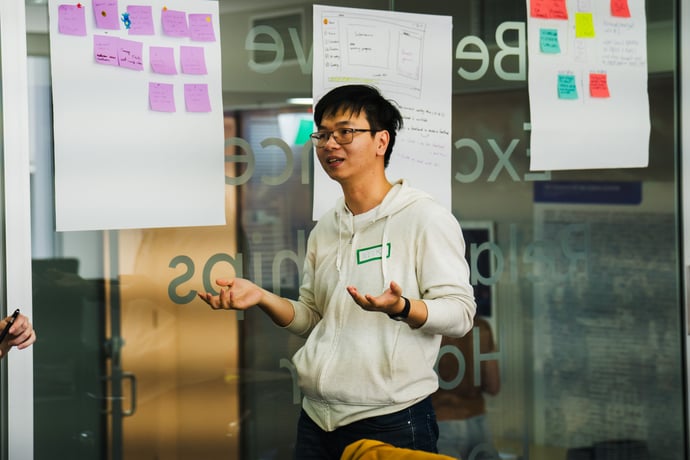
Student Advisory Group: With special thanks to our Student Advisory Group (The Circle) pictured throughout this policy. Your feedback helps us build services that increase life chances for other students around the world.
Global Operations & Contact
Global Head Office: 104/11 Chandos Street St Leonards NSW 2065 Australia
Phone: +61 2 9906 2700
Offices in: Dubai, London, Salt Lake City, Toronto