09 Jun 2026 /
Evelyn Levisohn
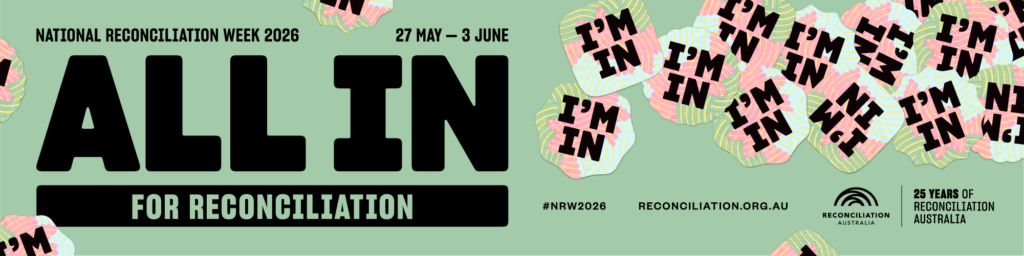
The theme for National Reconciliation Week this year was "All in for reconciliation". It is a call to all Australians to move away from the sidelines and take active steps toward genuine change. In a higher education context, this means listening to Indigenous leadership and student leaders, and deeply examining how universities cultivate empowering environments for First Nations students.
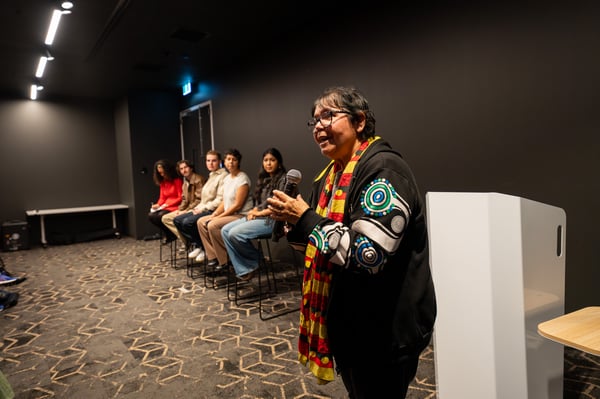
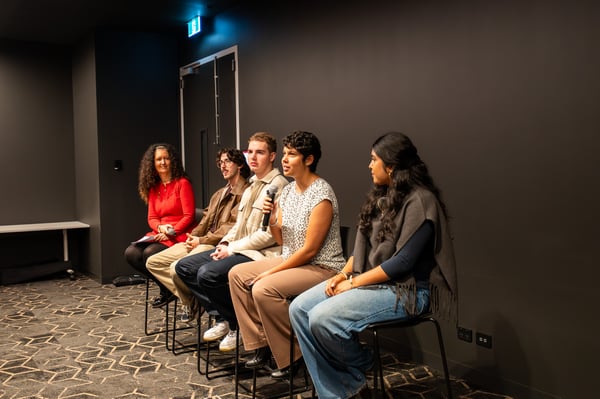
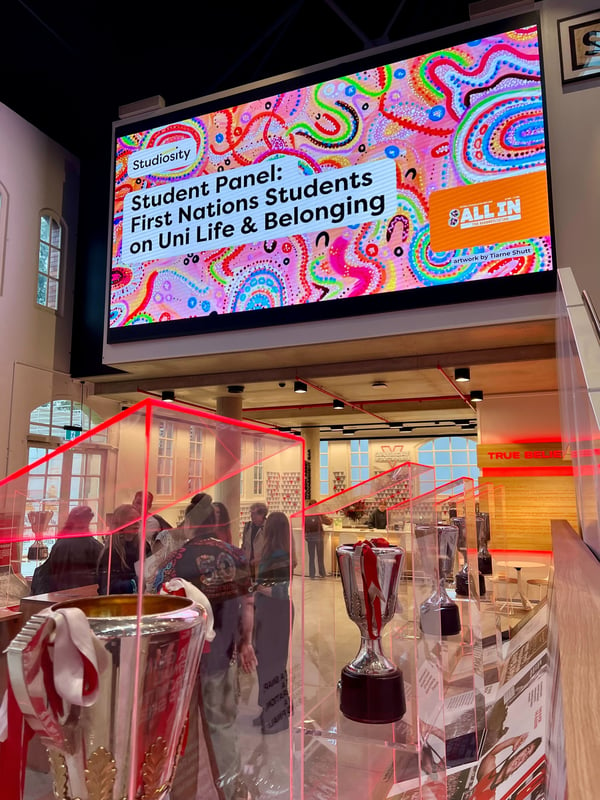
At a special live-recorded event hosted by Studiosity, we came together with an exceptional panel of Indigenous student leaders to discuss these very themes. Chaired by Professor Leanne Holt (Deputy Vice Chancellor Indigenous at UNSW), the panel - featuring students Siena, Tasya, Lachlan, and Jaiden - shared profound insights on shifting university and societal mindsets from standard 'compliance' to deep, relational empowerment. After a beautiful Welcome to Country from Aunty Maxine Ryan of the La Perouse Aboriginal Land Council, Studiosity staff and special guests from university partners were captivated by this panel of future leaders.
🎧 You can listen to the whole discussion on the Studiosity podcast, here.
Here are the key themes and takeaways from this incredible conversation.
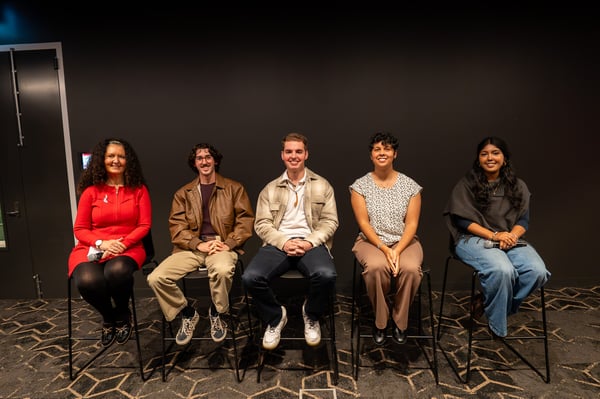 L-R: Prof Leanne Holt, Jaiden, Lachlan, Tasya, and Siena
Belonging is more than being welcomed, it's a feeling of purpose
A central theme of the panel was redefining what it actually means to "belong" on a university campus. (In the 2026 Australian Student Wellbeing Report, a third of students were either neutral or didn't feel that they 'belong' at uni, though this number was significantly lower for students who identify as Aboriginal or Torres Strait Islander - only 14%).
For many Indigenous students, Indigenous support centres, like the Gadigal Centre at the University of Sydney or the Walanga Muru Support Centre at Macquarie University, serve as vital spaces of comfort and familiarity.
However, the students discussed how true institutional belonging must extend across the entire campus ecosystem, ensuring students feel valued for the unique strengths they bring, rather than merely accommodated.
"Belonging, I feel, is something where you feel not only welcomed, but you feel wanted. I think there's a difference there... Having that familiarity where you just meet more and more people... you can relate that to a safe place, you can relate it to belonging."
- Jaiden, Marketing and Media student
Macquarie University
Overcoming the deficit mindset in University support
During the panel, Professor Leanne Holt challenged standard higher education structures by addressing how student support is traditionally framed. Often, universities view Indigenous student entry through a lens of 'cultural disadvantage' or deficit, immediately channeling them toward remedial academic support.
The panel argued for a systemic pivot: reframing these programs as proactive, empowering opportunities such as higher-level research mentoring, international exchanges, and corporate internships - to unlock students' existing potential rather than fixing their perceived weakness.
"Our positionality within universities has been framed purely around support, which places students as a deficit coming in. As soon as people see that there's Indigenous students coming to university, the first [thought] is, 'oh well, you need to connect with the centre for support.' It actually undervalues the experiences and knowledges that you already bring."
— Prof Leanne Holt, Deputy Vice Chancellor Indigenous, UNSW
Lachlan and Jaiden talked about the immense value of university outreach programs like the camps where regional high schoolers are flown in to demystify campus life, alongside structured initiatives like the Bandu program, which has successfully placed students into multi-year corporate internships. Further, when universities integrate their support into the everyday fabric of campus life, like when they put community lunches directly into students' academic calendars and offer hands-on, face-to-face scholarship application help; they break down the intimidating barriers of digital bureaucracy.
By creating visible, physical environments where students can step into leadership roles and give back as tutors and mentors themselves, universities are successfully moving away from treating diversity as a problem to be solved, and are instead treating it as a standard of excellence to be celebrated.
Extending the pipeline to postgraduate success
While significant corporate and university energy and resources are focused on Indigenous undergraduate enrolment and retention, a gap was highlighted in the postgraduate experience.
Tasya, a recent Medical Science Honours graduate, spoke about how the academic community must look beyond undergraduate completion and actively nurture Indigenous voices in research, Masters programs, and PhD spaces - particularly in those highly competitive STEM environments.
"It's not just about getting us into uni. And not just about getting us there enough to graduate. We want to get into the workforce. We want aim high and achieve really good things."
— Tasya, Medical Science Graduate (Honours),
University of Sydney
Decolonising knowledge systems across disciplines
When they discussed what 'all in for reconciliation' looks like on campus, the panel explained that it cannot remain an isolated extracurricular effort or a simple box-ticking exercise. For these students, structural change requires integrating First Nations methodologies and perspectives directly into foundational course curricula, across disciplines ranging from health and medical sciences to marketing and sociology.
By embedding these perspectives natively across the whole institution, universities can foster safer, more holistic professional environments for the future.
"When you start to decolonise knowledge, you start decolonising the way we all think. And that will really play a part in how we move forward together."
— Siena, Bachelor of Arts Student (Criminology), GO Foundation Scholar, University of Sydney
Recognising Indigenous culture as a living asset
Lachlan spoke at length about how he believes that for real change to happen, Australians must stop viewing the Indigenous culture and heritage of this country as a historical artefact, and actively recognise it as a living, breathing, reality that is still apparent across our society in different ways.
He noted that campus initiatives, community lunches, and visible cultural celebrations help break down awkwardness, and normalise cultural pride across the broader student body.
"A lot of people just see it as like some old thing that people used to do. It is still here... It's a thing still living. If we start involving the idea that it's not some old thing, people would really change how they see it."
— Lachlan, Medical Science Student,
Macquarie University
Changing the campus cultural landscape, one relationship at a time
Ultimately, the panel concluded that systemic equity and institutional excellence are built on a foundation of proactive, genuine human connection. While sweeping, structural policy changes and tailored programs are essential, everyday transformation happens through the creation of supportive, authentic campus communities.
By shifting the educational environment from the deficit, passive support to active empowerment, universities can champion a new legacy of success for generations of First Nations students to come.
🎧 You can listen to the whole discussion on the Studiosity podcast, here.
Read more about Studiosity's Reconciliation Action Plan, here.
Studiosity would like to thank the GO Foundation for their continued partnership, Jane Stanley from the Gadigal Centre for her time in consulting with our RAP Working Group, and the Sydney Swans for the venue for this event.